
Investors frequently ask for a comprehensive overview of the crop composition on a Coorg managed farmland plot — not just what is grown but when each crop begins producing and how much each contributes to total income. This FAQ provides that overview in practical, investor-friendly terms.
What is the typical crop mix on a Nature N Me managed farmland plot in Madikeri?
A fully developed Nature N Me agroforestry plot in Madikeri’s prime zone typically contains the following layers.
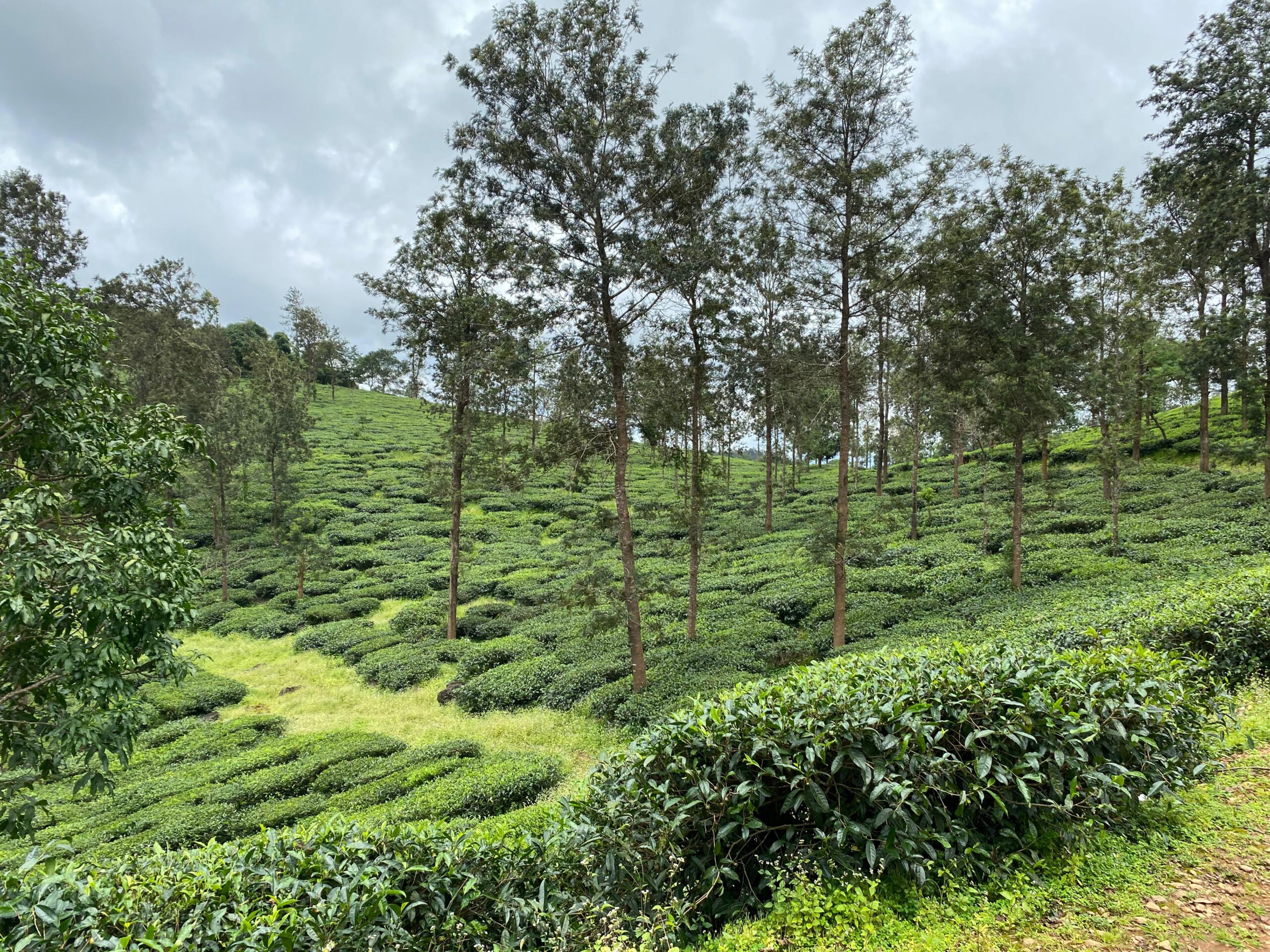
Canopy layer: Silver oak (Grevillea robusta) as the primary shade tree, spaced at six to eight metres, providing forty to sixty percent shade cover. Teak (Tectona grandis) planted at wider spacing as the long-term timber asset. In some plots, sandalwood (Santalum album) as a very long-term premium timber addition.
Mid layer: Arabica coffee (Coffea arabica) as the primary commercial crop, planted at two by two metre spacing, filling the mid-canopy space below the silver oak.
Understorey layer: Cardamom (Elettaria cardamomum) in the shaded, moist ground level, planted at one and a half by one and a half metre spacing in suitable sections of the plot.
Climbing vine layer: Black pepper (Piper nigrum) climbing the trunks of silver oak and teak shade trees throughout the estate.
Fruit layer: Mango (Mangifera indica), jackfruit (Artocarpus heterophyllus), and increasingly avocado (Persea americana) as mid-to-upper canopy fruit trees interspersed across the plot.
Early intercrop: Pineapple (Ananas comosus) in the inter-row spaces during the first three to four years before the main crops fill the available ground space.
When does each crop start generating income?
Pineapple: fourteen to eighteen months from planting. First meaningful income arrives in year two.
Cardamom: two to three years from planting for first commercial harvest. Full production from year three to four.
Pepper: two to three years for first harvest. Full production from year four to five.
Coffee (Arabica): three to four years for first flowering and small harvest. Commercially meaningful harvest from year four to five. Full production from year six to seven, sustained through years fifteen to twenty before rejuvenation pruning begins.
Mango (from grafted planting): three to four years for first fruiting. Commercial yield from year five to six. Peak production from year ten onwards.
Jackfruit (from grafted planting): three to four years to first fruit. Full production from year five to six.
Avocado (from grafted planting): three to four years to first fruiting. Commercial yield from year four to five.
Teak (timber): no income until year fifteen to twenty when selective harvest begins. At maturity, lump-sum timber income from each harvested tree.
Sandalwood: no heartwood income until year twenty-five to thirty. Highest per-kilogram value of any crop on the estate at maturity.
Silver oak: small annual income from pruning wood. Timber value from selective harvest at year fifteen to twenty.
How much does each crop contribute to total income?
On a fully mature five-acre plot in Madikeri at year eight to ten, the approximate income contribution by crop — expressed as percentage of total crop income — is roughly as follows.
Coffee (Arabica): fifty to sixty percent of total crop income, reflecting its dominance as the primary commercial crop. Cardamom: twenty to thirty percent — often the highest per-kilogram value crop, producing meaningful income disproportionate to its land footprint. Pepper: ten to fifteen percent — a reliable secondary spice income. Fruit (mango, jackfruit, avocado combined): five to fifteen percent depending on fruit tree maturity and market channel. Timber and pruning wood: small ongoing contribution from silver oak pruning, with lump-sum teak harvest income beginning from year fifteen.
These percentages shift over the investment horizon — in the first five years, cardamom and pepper contribute more proportionally because they mature faster than coffee. From year five to fifteen, coffee dominates. From year fifteen onwards, timber income begins adding a significant additional stream.