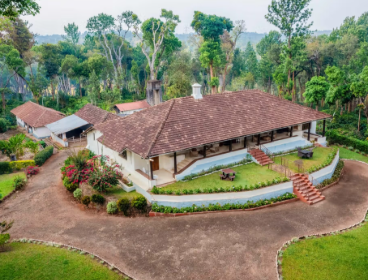
One of the most consistently asked questions by prospective Coorg farmland investors is about building — specifically, whether they can Build a Farmhouse on Coorg Agricultural Land or accommodation on their agricultural land. The answer involves understanding Karnataka’s land-use regulations, and it is more nuanced than either a simple yes or no.
Can I build a permanent house on agricultural land in Coorg?
Constructing a permanent residential building on agricultural land in Karnataka without DC (Divisional Commissioner) conversion is not legally permitted. Agricultural land is classified for agricultural use — growing crops and the activities directly associated with them. Converting it to residential or commercial use requires a formal DC conversion order that reclassifies the land’s use category.
This is not a Coorg-specific rule — it applies across Karnataka to all agricultural land. Investors who see advertisements for “farmhouses on agricultural land” should understand that these properties either have DC conversion (in which case they are no longer agricultural land for tax purposes and may have lost the agricultural income exemption), are constructed without conversion (creating legal risk for the buyer), or are structured under the homestay or agri-tourism policy framework discussed in earlier posts.
What can I legally build on agricultural land in Coorg without conversion?
Karnataka’s regulations permit certain structures on agricultural land for agricultural use without DC conversion. These include farm equipment storage sheds, pump houses for irrigation infrastructure, basic agricultural worker accommodation (typically simple structures for estate employees), and processing infrastructure directly connected to agricultural activities (coffee pulping and drying areas, storage for harvested produce).
The key principle is that permitted structures must be necessary for and connected to the agricultural use of the land — not residential accommodation independent of agricultural purpose.
What about temporary or semi-permanent structures for farmstay?
This is where the regulatory picture becomes more nuanced, as discussed in our earlier post on agri-tourism policy. Karnataka’s homestay policy creates a framework for certain accommodation activities on agricultural properties where the owner or a family member resides on or uses the property — blurring the line between agricultural use and limited hospitality use.
The specific structures permitted, the required approvals, and the conditions of operation vary by the scale and nature of the intended activity. Small-scale farmstay accommodation on an actively farmed estate, where the accommodation is clearly incidental to the agricultural use, is treated differently from a purpose-built resort on agricultural land.
What is DC conversion and should I consider it?
DC conversion is the formal process of converting agricultural land to non-agricultural use — typically residential (for building a house) or commercial (for operating a resort or business). Once converted, the land is no longer classified as agricultural and the agricultural income tax exemption under Section 10(1) no longer applies to income derived from it.
For investors whose primary interest is the agricultural investment model — tax-free crop income and land appreciation — DC conversion is generally counterproductive, as it eliminates the tax advantage that makes the investment financially compelling. For investors who want to build a permanent residence on the land and are not primarily motivated by agricultural income, DC conversion is the legal pathway to do so.
Can I buy agricultural land in Coorg and also have a farmhouse on a separate residential plot nearby?
Yes — and this is actually a practical model used by some Nature N Me investors. They purchase agricultural farmland (under agricultural classification, retaining all the investment benefits) and separately purchase a small residential plot in a nearby village or town where a house can be legally constructed. The farmland provides the agricultural investment and income; the separate residential plot provides the accommodation base for visits.
This separation keeps each property in its correct legal category — the farmland remains agricultural for tax and regulatory purposes, and the residential accommodation is properly constructed on land zoned for residential use.
Disclaimer
The information provided in this post is for educational purposes only and should not be considered financial, legal, or professional agricultural advice. Agricultural yields, pricing, and returns are subject to market, weather, and environmental factors, and past estimates do not guarantee future results. Specific crop arrangements depend on individual agreements, and prospective buyers should conduct independent due diligence before investing. Direct contacts provided connect to sales representatives for project details.
Frequently Asked Questions
Can a non-agriculturist build a farmhouse on Coorg agricultural land?
In Karnataka, non-agriculturists can purchase agricultural land under current state land reforms, but building a residential farmhouse on it still requires meeting legal eligibility and obtaining appropriate local sanctions. Living structures built on unconverted agricultural land remain restricted strictly to farm support uses.
What is the maximum area for a farmhouse on 1 acre in Karnataka?
Under Karnataka land revenue rules, farm buildings or worker quarters built on agricultural land without conversion are generally restricted to a small fraction of the plot—typically up to 10% of the land area or a maximum cap (often around 1,000 to 2,000 sq. ft.) purely for agricultural utility.
Do I need DC conversion to build a farmhouse in Coorg?
Yes, constructing a permanent, full-scale residential farmhouse or guest home legally requires DC (Deputy Commissioner) land-use conversion. Building without DC conversion limits you to basic farm sheds, worker accommodation, or processing facilities directly tied to agricultural operations.