
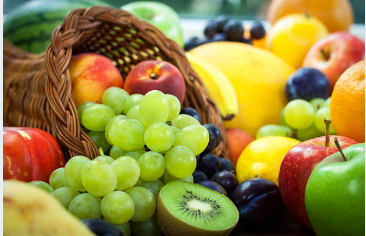
Fruit orchards are one of the most attractive additional income layers available on Coorg farmland — producing harvestable crops year after year with relatively low management input once established. But investors consistently ask the same questions: which fruits actually grow well in Coorg’s conditions, how long before they produce, and what can I realistically expect to earn? This FAQ answers all of them.
Which fruit trees grow best in Coorg’s climate?
Coorg’s combination of high rainfall, humid air, moderately warm temperatures (15–30°C at mid-altitude), and well-drained laterite soil supports a wide range of tropical and sub-tropical fruit species. The best performers in Coorg’s managed farmland context are as follows.
Mango thrives across Coorg’s altitude range, with grafted commercial varieties (Alphonso, Totapuri, Badami) producing well in lower-to-mid altitude zones. Mature trees are highly productive and fruit reliably every season. Jackfruit is arguably the most naturally suited fruit to Coorg — it grows without irrigation in the local soil, produces enormous yields of large fruit, and requires almost no active management once established. Its only limitation is that bulk jackfruit prices have historically been low, though processing into value-added products changes this equation significantly.
Avocado has shown strong results in Coorg’s mid-altitude zones (700–1,200 metres) — the humidity and temperature profile suit its requirements well, and domestic demand far exceeds current supply. Pineapple grows quickly as an intercrop in the spaces between young tree plantings and generates income within fourteen to eighteen months. Passion fruit grows as a climbing vine similar to pepper, using existing support structures and producing in less than a year from planting. Banana establishes and fruits quickly in the early years of a new plantation, providing bridge income while other fruit trees mature.
When do fruit trees start producing income?
The production timeline varies significantly by species. Banana can produce within twelve to fifteen months of planting. Pineapple produces in fourteen to eighteen months. Passion fruit begins producing in six to ten months from planting. Avocado from grafted varieties starts fruiting from year three to four. Mango from grafted trees begins producing commercially from year four to five. Jackfruit from seedlings takes five to seven years to begin producing but from grafted planting material it produces from year three to four.
The practical implication is that a mix of fast-maturing and slow-maturing species on the same plot creates both early income and growing long-term income as the tree crops develop.
What does fruit orchard income look like per acre?
Income per acre from fruit trees varies enormously based on species, maturity, management quality, and which market channel the produce is sold through. At commodity bulk prices, a fully productive mango acre might earn one to two lakhs per year; at premium direct-to-consumer or processing prices, the same production can earn two to four lakhs. Avocado at current Indian market prices — where domestic supply is very limited — can earn two to six lakhs per acre at full production from year five onwards, depending on variety and quality.
Fruit income is additional to coffee, cardamom, and pepper income on the same land area — it occupies canopy or ground space that would otherwise be unproductive, making each additional rupee of fruit income essentially a bonus on the existing agricultural infrastructure.
Can I mix fruit orchards with coffee on the same plot?
Yes — and this is exactly what well-designed Coorg agroforestry plots do. Mango and jackfruit trees are planted in the mid-to-upper canopy alongside silver oak, with coffee growing beneath. Avocado occupies similar canopy positions. Pineapple and passion fruit are planted in the inter-row spaces at ground level. The result is a fully integrated multi-species system where every level of the available vertical growing space is producing something harvestable.
Does fruit production require separate management from the coffee and spice crops?
Nature N Me’s agricultural management includes fruit tree care — pruning, fertilisation, irrigation, and harvest coordination — as part of the integrated estate management program. Fruit harvest timing is coordinated with the broader crop calendar to ensure efficient use of the same labour team. Investors do not need to arrange separate management for the fruit component of their estate.
Contact Nature N Me at naturenme.in or WhatsApp +91 98805 21637 to understand the fruit orchard composition on available plots.