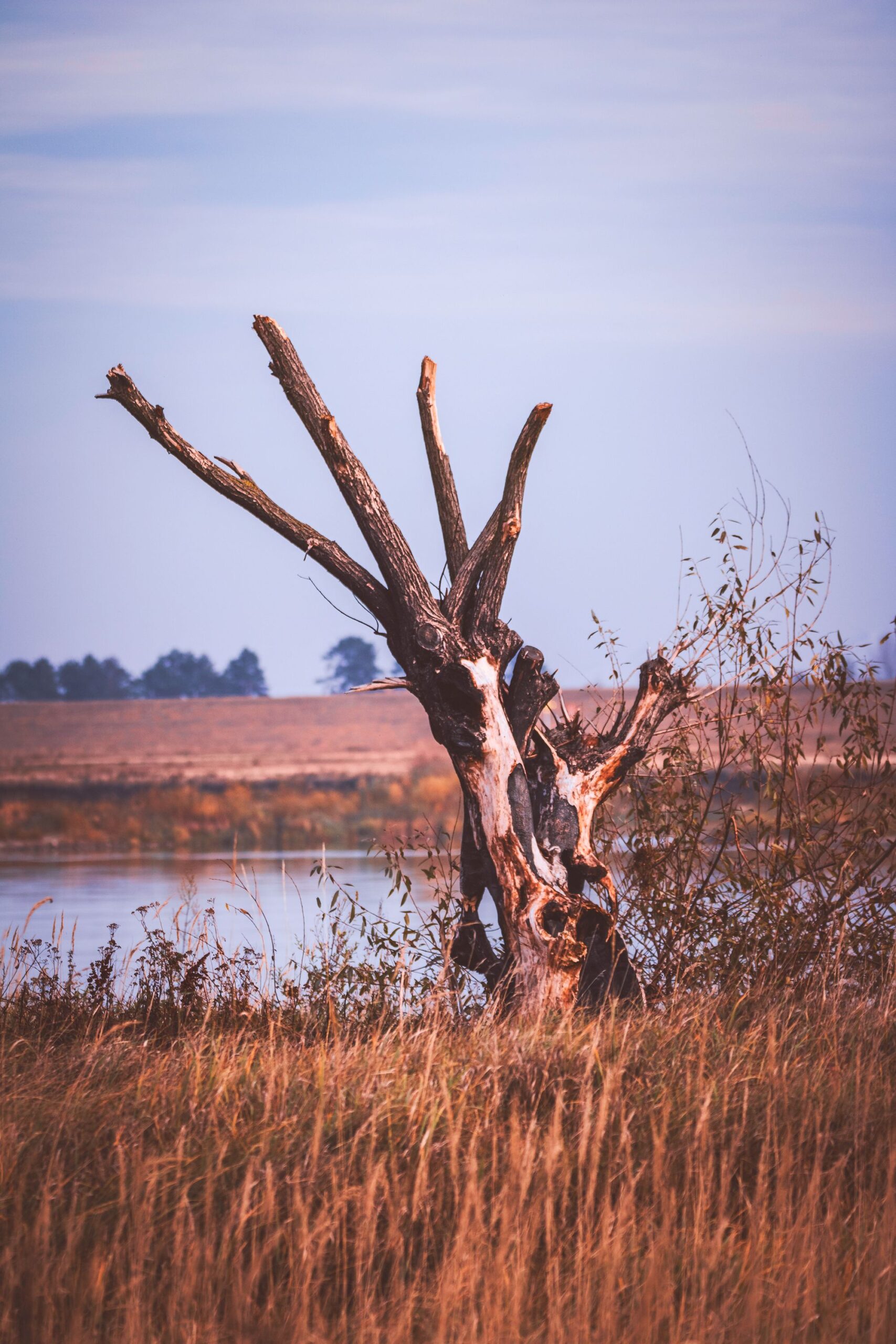
When a tree dies, many people assume its purpose has come to an end. In reality, a dead tree can become one of the most valuable parts of a forest. Known as a standing snag, a dead tree continues to support life for years, providing food, shelter, and nesting spaces for a wide variety of plants and animals.
In natural forests and biodiversity-friendly coffee plantations, dead trees are not simply remnants of the past—they are an essential part of a healthy ecosystem. They demonstrate that nature wastes nothing, transforming every stage of a tree’s life into an opportunity for new life to flourish.
A Safe Home for Birds
Many birds rely on dead trees for nesting. Woodpeckers are among the first to create cavities in the softening wood, which later become homes for owls, parrots, barbets, and other cavity-nesting birds.
Unlike living trees, dead trunks are easier to excavate, making them ideal nesting sites. These natural shelters protect birds from predators and harsh weather while providing a secure place to raise their young.
A single standing snag can house multiple species over many years.
A Feast for Insects
As wood begins to decompose, it attracts beetles, termites, ants, and other insects that feed on decaying wood. These insects play a vital role in breaking down organic material and returning nutrients to the soil.
They also become an important food source for birds, reptiles, amphibians, and small mammals. This creates a thriving food web centred around what appears to be a lifeless tree.
Without these insects, the natural recycling process would slow dramatically.
Nature’s Recycling System
Dead trees gradually break down through the combined work of fungi, bacteria, insects, and weather. Over time, the wood releases valuable nutrients such as carbon, nitrogen, and minerals back into the soil.
These nutrients nourish nearby plants, young saplings, and microorganisms, helping the next generation of vegetation grow stronger.
In this way, every fallen or standing dead tree becomes part of nature’s endless cycle of renewal.
Supporting Biodiversity
Standing dead trees increase biodiversity by creating habitats that living trees cannot provide. Small mammals may hide inside hollow trunks, reptiles bask on sunlit branches, while mosses, lichens, and fungi colonise the bark.
Even after the tree eventually falls, the decaying log continues to support countless organisms, enriching the forest floor and retaining moisture during dry seasons.
The more diverse the habitats within a forest, the healthier and more resilient the ecosystem becomes.
Lessons for Sustainable Plantations
Modern sustainable farming recognises the importance of preserving natural habitats wherever possible. While unsafe dead trees near buildings or pathways may need to be removed, retaining selected standing snags in larger landscapes can greatly benefit wildlife.
Coffee plantations that maintain native trees, natural vegetation, and wildlife-friendly spaces often experience greater biodiversity and stronger ecological balance.
These natural features help create healthier environments where farming and conservation work hand in hand.
Conclusion
A dead tree is far from lifeless. It continues to nurture birds, insects, fungi, mammals, and countless microscopic organisms long after it stops growing. By supporting biodiversity and recycling nutrients, standing snags play a crucial role in keeping forests healthy.
The next time you notice a weathered tree standing quietly among a plantation or forest, look beyond its appearance. It may no longer bear leaves, but it is still giving life to an entire community of living creatures—proving that in nature, every ending is also the beginning of something new.