
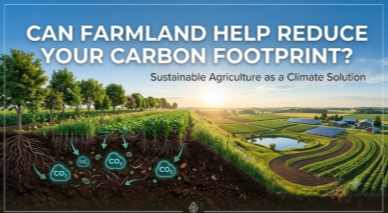
As climate change becomes an increasingly important global concern, many people are looking for practical ways to reduce their environmental impact. One often-overlooked solution is sustainable farmland.
Understanding Carbon Footprints
A carbon footprint represents the total greenhouse gas emissions generated by an individual, business, or activity. Reducing these emissions is essential for building a more sustainable future.
How Farmland Stores Carbon
Plants absorb carbon dioxide from the atmosphere through photosynthesis. Trees, crops, and healthy soils act as natural carbon sinks, capturing and storing carbon over long periods.
The Importance of Healthy Soil
Soil contains significant amounts of organic carbon. Sustainable farming practices such as composting, cover cropping, and reduced soil disturbance help increase carbon storage while improving soil fertility.
Trees and Agroforestry Systems
Agricultural landscapes that incorporate trees can capture additional carbon while supporting biodiversity and enhancing ecosystem resilience. Agroforestry is increasingly recognized as an effective climate-smart farming practice.
Supporting Sustainable Land Management
Farmland managed with environmental responsibility can contribute to water conservation, soil health, and ecosystem restoration while maintaining productive agricultural operations.
Long-Term Environmental Benefits
Well-managed farmland not only supports food production but also plays a role in climate mitigation, biodiversity conservation, and natural resource protection.
Why Sustainable Agriculture Matters
As awareness of environmental challenges grows, sustainable agriculture offers an opportunity to align economic activity with ecological responsibility. Healthy landscapes benefit communities, ecosystems, and future generations.
Conclusion
Farmland can be much more than a productive asset. When managed sustainably, it becomes part of the solution to environmental challenges by supporting carbon storage, ecosystem health, and long-term sustainability.