
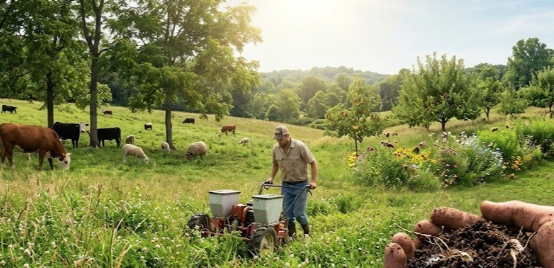
In recent years, farming has evolved beyond simply growing crops. Today, people are looking for healthier food, cleaner environments, and farming methods that protect the planet instead of exhausting it. This shift has brought regenerative farming into the spotlight — a powerful approach that not only sustains the land but actively improves it.
Unlike conventional farming, which often focuses on short-term production, regenerative farming works with nature to rebuild soil health, conserve water, increase biodiversity, and create long-term agricultural resilience.
What Is Regenerative Farming?
Regenerative farming is a system of agriculture designed to restore and enhance natural ecosystems. It focuses on improving the health of the soil while reducing dependency on harmful chemicals and excessive resource use.
Instead of treating soil as just a growing medium, regenerative farmers view soil as a living ecosystem filled with microorganisms, nutrients, and organic matter that support healthier crops naturally.
This farming model includes practices such as:
- Cover cropping
- Crop rotation
- Composting
- Agroforestry
- Minimal soil disturbance
- Rainwater harvesting
- Natural pest management
The goal is simple: leave the land healthier than before.
Why Soil Health Matters More Than Ever
Healthy soil is the foundation of sustainable agriculture. Unfortunately, years of chemical-heavy farming have degraded farmland across many regions.
Poor soil leads to:
- Reduced crop productivity
- Water retention problems
- Increased erosion
- Greater dependence on fertilizers
- Loss of beneficial microorganisms
Regenerative farming reverses this damage by rebuilding organic matter in the soil. Healthy soil acts like a sponge, holding more water and nutrients naturally. This reduces irrigation needs and improves crop resilience during droughts.
For farmland investors and sustainable farming communities, soil restoration also increases the long-term value of agricultural land.
Water Conservation Through Natural Farming
Regenerative farming improves water efficiency by:
- Increasing soil moisture retention
- Reducing runoff and erosion
- Encouraging groundwater recharge
- Using mulch and natural coverings to reduce evaporation
Techniques like drip irrigation, rainwater harvesting, and organic mulching help farms use every drop wisely while maintaining crop health.
This makes regenerative farms more climate-resilient and environmentally responsible.
Biodiversity Creates Stronger Farms
Modern monoculture farming focuses on growing a single crop repeatedly. While efficient in the short term, it weakens ecosystems and increases vulnerability to pests and diseases.
Regenerative farming promotes biodiversity by integrating:
- Multiple crop varieties
- Fruit trees and native plants
- Pollinator-friendly environments
- Livestock integration
- Natural habitats for birds and insects
A biodiverse farm becomes naturally balanced, reducing the need for chemical pesticides and creating a healthier ecosystem overall.
Carbon Farming: Agriculture That Helps Fight Climate Change
One of the most exciting aspects of regenerative farming is its ability to capture carbon from the atmosphere and store it in the soil.
Healthy soils rich in organic matter absorb carbon naturally. This process, known as carbon sequestration, helps reduce greenhouse gases while improving soil fertility.
In a world searching for climate solutions, regenerative agriculture offers a rare win-win:
- Better farming productivity
- Healthier ecosystems
- Reduced environmental impact
Farms are no longer just food producers — they can become part of the climate solution.
Why Consumers Are Supporting Sustainable Farms
Today’s consumers care deeply about where their food comes from. They are increasingly choosing products grown through ethical and sustainable practices.
People want:
- Chemical-free produce
- Environmentally responsible farming
- Transparency in food production
- Sustainable rural development
This growing awareness is creating strong demand for regenerative farms, eco-conscious farmland projects, and sustainable agricultural communities.
The Future of Farming Is Regenerative
Agriculture is entering a new era — one focused not only on production, but also on restoration. Regenerative farming proves that agriculture can nourish people while healing the planet at the same time.
For investors, farmers, and environmentally conscious communities, regenerative agriculture represents a long-term vision rooted in sustainability, resilience, and responsible land stewardship.
The future of farming is not about taking more from the land. It is about giving back to it.