
98805 21637 info@naturenme.in

Why Permaculture Could Be the Smartest Investment of the Next Decade

by | May 19, 2026

When people hear the word “farming,” they often imagine hard labor, seasonal uncertainty, and traditional agriculture.

But permaculture is changing that narrative completely.

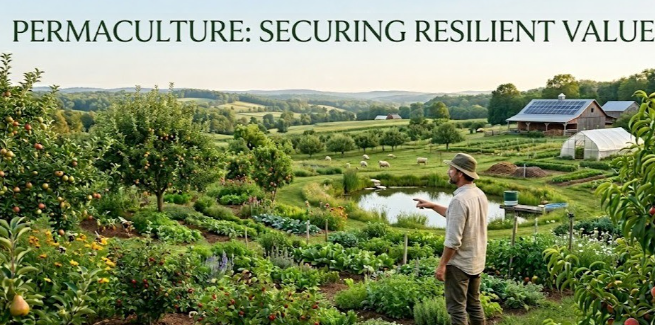
Permaculture is not just about growing crops. It is about designing ecosystems that work with nature instead of against it.

Imagine a farmland where: • Rainwater is naturally conserved • Fruit trees support soil fertility • Waste becomes compost • Different plants protect and nourish each other • The land becomes richer every single year

That is the power of permaculture.

Unlike conventional farming, which often exhausts the soil over time, permaculture focuses on regeneration. It creates self-sustaining systems that require fewer external resources while improving the health of the land.

And this is exactly why forward-thinking investors are beginning to pay attention.

The future value of land may not depend only on location. It may depend on how sustainably that land is designed.

A well-planned permaculture farm can create: ✔ Long-term soil health ✔ Multiple income streams from diverse crops ✔ Better water retention ✔ Lower maintenance costs over time ✔ Eco-tourism and wellness opportunities

But beyond profits, permaculture offers something even more valuable: Resilience.

In a world facing climate uncertainty, rising temperatures, and resource shortages, regenerative land systems could become one of the most important assets of the future.

The question is no longer: “How much land do we own?”

The real question is: “How intelligently are we designing the land we own?”

Permaculture is not a trend. It is a blueprint for the future.

Recent Posts

Agricultural Land Classification Rules in Karnataka

Why Classification Is the First Thing to Check Before evaluating soil quality, crop potential, or expected returns, the single most important question about any land purchase is how it is officially classified under Karnataka's land records. This single detail...

Is Managed Farmland Recession-Proof? A Closer Look

The Question Every Cautious Investor Asks Whenever markets turn volatile, a common question resurfaces: which assets actually hold up during a downturn? Equities and real estate both have well-documented histories of significant declines during recessions. Managed...

Startup Founders and the Case for Managed Farmland

A Portfolio Concentrated in One Bet Startup founders often have a portfolio problem unique to their situation: a significant share of their net worth is tied up in equity in their own company, an asset that is illiquid, hard to value precisely, and entirely dependent...

Farmland Investment for Women Building Wealth

A Shift in Who Is Asking About Land Farmland investment conversations have historically skewed toward male family decision-makers, often the household head managing all major financial decisions. That pattern is changing. More women, particularly working professionals...

Timber and Silvopasture: Long-Term Farmland Income

The Slowest, and Sometimes Most Valuable, Crop Most conversations about farmland income focus on annual or near-annual harvests: coffee, cardamom, pepper, fruit. Timber trees work on an entirely different timescale, often taking 10 to 20 years or more to mature, but...