When people hear the word “farming,” they often imagine hard labor, seasonal uncertainty, and traditional agriculture.
But permaculture is changing that narrative completely.
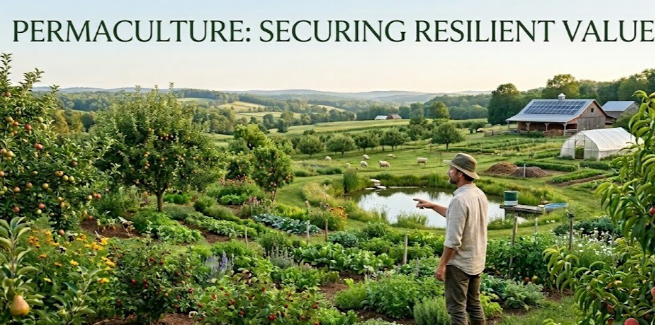
Imagine a farmland where: • Rainwater is naturally conserved • Fruit trees support soil fertility • Waste becomes compost • Different plants protect and nourish each other • The land becomes richer every single year
That is the power of permaculture.
Unlike conventional farming, which often exhausts the soil over time, permaculture focuses on regeneration. It creates self-sustaining systems that require fewer external resources while improving the health of the land.
And this is exactly why forward-thinking investors are beginning to pay attention.
The future value of land may not depend only on location. It may depend on how sustainably that land is designed.
A well-planned permaculture farm can create: ✔ Long-term soil health ✔ Multiple income streams from diverse crops ✔ Better water retention ✔ Lower maintenance costs over time ✔ Eco-tourism and wellness opportunities
But beyond profits, permaculture offers something even more valuable: Resilience.
In a world facing climate uncertainty, rising temperatures, and resource shortages, regenerative land systems could become one of the most important assets of the future.
The question is no longer: “How much land do we own?”
The real question is: “How intelligently are we designing the land we own?”
Permaculture is not a trend. It is a blueprint for the future.