
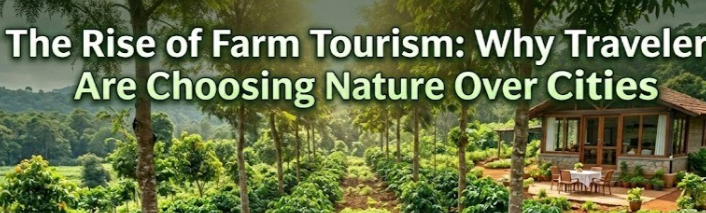
Travel is changing. People are no longer looking only for crowded tourist attractions, luxury hotels, or fast-paced vacations. Instead, travelers are beginning to seek something deeper — peace, authenticity, and connection with nature.
This shift has given rise to one of the fastest-growing lifestyle trends today: farm tourism.
Across scenic destinations like Coorg, Chikkamagaluru, and Sakleshpur, farm stays and nature-based experiences are attracting travelers who want to escape city life and experience a slower, more meaningful way of living.
What Is Farm Tourism?
Farm tourism, also known as agritourism, allows people to stay and experience life on farms, plantations, and countryside properties.
Instead of traditional hotel experiences, visitors can enjoy:
- Coffee estate stays
- Orchard walks
- Organic farming experiences
- Campfires and nature trails
- Farm-to-table meals
- Village-style living
It combines travel, wellness, and sustainability into one unique experience.
Why Travelers Are Choosing Farm Stays
1. People Want Real Experiences
Modern travelers are becoming less interested in artificial luxury and more interested in authentic experiences.
Farm tourism offers:
- Quiet surroundings
- Fresh local food
- Natural landscapes
- Cultural experiences
- Slower and more mindful living
It creates memories that feel genuine and refreshing.
2. Nature Has Become a Luxury
In crowded cities, access to greenery and peace is becoming rare. That is why spending time in nature now feels like a premium experience.
Waking up to mist-covered plantations, hearing birds instead of traffic, and breathing fresh air creates a sense of calm that many people deeply value today.
Farm tourism offers this naturally.
3. Wellness Travel Is Growing Rapidly
Travel is no longer just about sightseeing. Many people now travel for:
- Mental relaxation
- Digital detox
- Stress relief
- Better sleep
- Wellness experiences
Farm stays support this perfectly because they encourage slower routines and deeper connection with nature.
For many visitors, even a short stay in a plantation environment feels emotionally healing.
4. Supporting Sustainable Tourism
Farm tourism also supports environmentally responsible travel.
Unlike large-scale commercial tourism, farm stays often focus on:
- Sustainable construction
- Organic farming
- Local employment
- Water conservation
- Biodiversity protection
This creates tourism that benefits both local communities and the environment.
Why Farm Tourism Is an Opportunity for Landowners
As demand for nature-based travel increases, farmland is becoming more valuable not only for agriculture but also for hospitality and eco-tourism.
Landowners can create:
- Boutique farm stays
- Eco-retreats
- Coffee estate experiences
- Organic dining experiences
- Wellness destinations
This creates additional income opportunities while preserving the beauty of the land.
The Emotional Value of Countryside Living
One of the biggest reasons farm tourism is growing is because it reconnects people with simple living.
Moments like:
- Drinking fresh coffee in a plantation
- Walking barefoot on wet grass
- Watching sunsets over green hills
- Eating freshly harvested fruits
create a kind of happiness that modern urban life often lacks.
People leave farm stays feeling calmer, healthier, and more connected.
The Future of Travel Is Green
As sustainability becomes more important globally, the future of tourism is moving toward experiences that are eco-conscious, peaceful, and meaningful.
Farm tourism represents this future because it combines:
- Nature
- Wellness
- Sustainability
- Authentic experiences
- Responsible travel
It is not just a trend — it is a lifestyle shift.
Final Thoughts
Farm tourism is redefining the way people travel and experience luxury. It proves that true relaxation is not found in crowded destinations, but in places where nature leads the experience.
As more people seek meaningful escapes from urban life, farmland and eco-tourism are becoming powerful parts of the future travel industry.
Because sometimes, the best destination is not a city skyline — it is a quiet farm surrounded by nature.