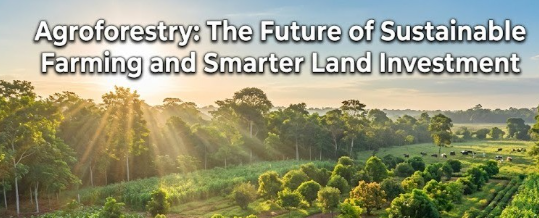
As the world searches for greener and more sustainable ways of living, agroforestry is emerging as one of the most powerful solutions for the future. It combines agriculture and forestry into a single ecosystem, creating farmland that is productive, environmentally friendly, and economically valuable.
Today, agroforestry is no longer just a farming technique — it is becoming a modern investment trend that supports both nature and long-term growth.
What Is Agroforestry?
Agroforestry is the practice of growing trees, crops, and sometimes livestock together on the same piece of land. Instead of clearing forests for farming, agroforestry works with nature to create balanced ecosystems.
This method improves soil quality, conserves water, supports biodiversity, and increases the long-term productivity of farmland.
Examples of agroforestry include:
- Coffee plantations under shade trees
- Fruit orchards combined with spice crops
- Timber trees alongside agricultural crops
- Mixed plantations that support biodiversity
It is farming designed around sustainability rather than exploitation.
Why Agroforestry Matters More Than Ever
Modern agriculture often focuses on short-term production, which can damage soil health and natural ecosystems over time.
Agroforestry takes a different approach by creating systems that:
- Protect the environment
- Improve land fertility
- Reduce water loss
- Increase climate resilience
- Generate multiple income sources
In a world facing climate change and environmental challenges, agroforestry offers a smarter path forward.
Multiple Crops, Multiple Opportunities
One of the biggest advantages of agroforestry is diversification.
Instead of relying on a single crop, landowners can grow:
- Coffee
- Pepper
- Areca nut
- Fruit trees
- Timber species
- Medicinal plants
This creates multiple streams of income while reducing the risks associated with monoculture farming.
For investors, it provides both environmental and financial stability.
Agroforestry Creates Healthier Ecosystems
Healthy land creates healthy living.
Agroforestry naturally supports:
- Bird populations
- Pollinators like bees and butterflies
- Soil microorganisms
- Natural water cycles
- Carbon absorption
Trees provide shade, reduce soil erosion, and improve moisture retention, making farmland more sustainable in the long run.
This balance between agriculture and ecology is what makes agroforestry so valuable today.
A Sustainable Investment for Future Generations
Modern investors are beginning to look beyond traditional real estate and explore assets that combine purpose with profitability.
Agroforestry projects attract people because they offer:
- Long-term land appreciation
- Eco-conscious investments
- Passive agricultural income
- Wellness-oriented lifestyles
- Environmental contribution
Unlike short-term market trends, sustainable farmland continues to grow in relevance as demand for green living increases.
The Lifestyle Advantage of Agroforestry
Agroforestry landscapes are not only productive — they are beautiful.
Imagine spending time in:
- Dense green plantations
- Fruit orchards
- Coffee estates with shade trees
- Fresh and pollution-free surroundings
These environments create peaceful experiences that urban life often lacks.
This is why many agroforestry projects are also becoming ideal spaces for:
- Farm stays
- Eco-tourism
- Wellness retreats
- Weekend homes
The Future Belongs to Sustainable Land
As people become more aware of environmental responsibility, sustainable land development is becoming essential rather than optional.
Agroforestry represents the future because it balances:
- Nature conservation
- Economic growth
- Sustainable farming
- Better living experiences
It is a model where both people and the environment thrive together.
Final Thoughts
Agroforestry is changing the way we think about farming, investments, and land ownership. It proves that growth does not have to come at the cost of nature.
By combining trees, crops, sustainability, and long-term value, agroforestry creates farmland that is productive, resilient, and future-ready.