
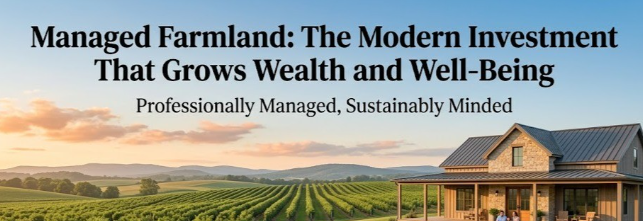
In a world where people are searching for smarter investments, healthier lifestyles, and sustainable living, managed farmland is emerging as one of the most powerful opportunities. It is no longer just about owning agricultural land — it is about owning a professionally maintained asset that generates income, creates long-term value, and reconnects people with nature.
Today, many investors, working professionals, entrepreneurs, and even families are turning toward managed farmland because it combines financial growth with emotional satisfaction. Unlike traditional real estate, farmland offers a unique blend of stability, sustainability, and future demand.
What is Managed Farmland?
Managed farmland refers to agricultural land that is professionally maintained by experts on behalf of the landowner. Instead of the owner handling farming activities personally, a dedicated management team takes care of:
- Plantation and crop planning
- Irrigation systems
- Soil health management
- Harvesting and maintenance
- Security and land care
- Profit-sharing or revenue generation
This allows investors to enjoy the benefits of farmland ownership without the stress of daily farm operations.
Why Managed Farmland is Becoming Popular
The modern generation is looking beyond city apartments and short-term investments. People now want assets that offer:
- Long-term appreciation
- Passive income opportunities
- Sustainable value
- Peaceful lifestyle options
- A connection with nature
Managed farmland fulfills all these expectations while also supporting eco-friendly living.
Financial Benefits of Managed Farmland
1. Long-Term Land Appreciation
Land is one of the few assets that cannot be manufactured. As urban expansion continues and agricultural land becomes more valuable, managed farmland often appreciates significantly over time.
Unlike depreciating assets, farmland has the potential to grow steadily in value year after year.
2. Passive Income Generation
One of the biggest advantages of managed farmland is the opportunity to earn passive income through:
- Fruit orchards
- Spice plantations
- Timber cultivation
- Organic farming
- Agroforestry models
Crops such as avocado, coffee, pepper, sandalwood, teak, and exotic fruits can generate recurring income depending on the plantation model.
This means your land is not sitting idle — it is actively working for you.
3. Lower Maintenance Stress
Traditional farming requires constant involvement and expertise. Managed farmland removes this burden by offering professional support.
Investors do not need to worry about:
- Labor management
- Crop maintenance
- Irrigation issues
- Farming knowledge
- Day-to-day supervision
Everything is handled by experienced agricultural professionals.
4. Diversification of Investment Portfolio
Most people invest only in:
- Gold
- Stocks
- Apartments
- Fixed deposits
But farmland adds diversification to an investment portfolio. Agricultural assets are often less affected by market volatility compared to traditional financial investments.
This makes managed farmland a strong long-term wealth-building option.
Lifestyle Benefits Beyond Profit
Managed farmland is not just a financial investment — it is also a lifestyle upgrade.
Escape from Urban Stress
Modern city life is filled with:
- Traffic
- Pollution
- Noise
- Stressful routines
Farmland offers a peaceful environment where people can relax, reconnect with nature, and experience a healthier lifestyle.
Many families now use their farmland as:
- Weekend retreats
- Nature homes
- Wellness spaces
- Family gathering destinations
Sustainable Living for the Future
Consumers are becoming more aware of environmental issues. Managed farmland supports:
- Organic farming
- Water conservation
- Agroforestry
- Soil regeneration
- Biodiversity protection
Investing in farmland is not only beneficial for the owner but also for the planet.
Emotional Satisfaction
Owning farmland creates a sense of pride and fulfillment. Watching trees grow, harvesting crops, and seeing land transform into a thriving ecosystem gives emotional value that many modern investments cannot provide.
For many investors, managed farmland becomes more than an asset — it becomes a legacy for future generations.
What Profits Can Investors Expect?
Profitability depends on several factors:
- Location of the land
- Crop selection
- Plantation model
- Market demand
- Maintenance quality
Typically, managed farmland can provide:
- Land appreciation over the years
- Seasonal agricultural income
- Long-term plantation returns
- Eco-tourism or farmhouse opportunities
Some plantation models may take a few years to mature but can generate substantial returns in the long run.
The key advantage is that farmland combines both capital growth and productive income.
Why the Future Looks Bright for Managed Farmland
The demand for sustainable investments is growing rapidly. At the same time:
- Food demand is increasing
- Agricultural land is becoming limited
- Organic products are gaining popularity
- People are seeking healthier lifestyles
This creates strong future potential for managed farmland investments.
As more individuals prioritize sustainability, wellness, and long-term wealth creation, managed farmland is becoming one of the most future-ready investment opportunities.
Final Thoughts
Managed farmland is redefining how people think about investments. It offers more than financial returns — it offers sustainability, peace, passive income, and a deeper connection with nature.
In an uncertain world, owning productive land backed by professional management can become a smart and meaningful investment for the future.
The real beauty of managed farmland is simple: While your land grows greener, your wealth has the opportunity to grow with it.