
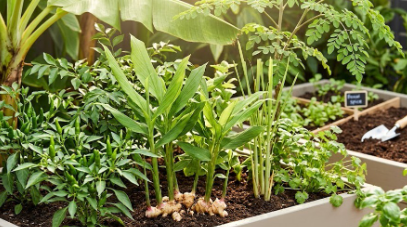
There’s something quietly remarkable about walking into your garden and picking the exact spice you need — fresh turmeric for a curry, a sprig of lemongrass for tea, a handful of curry leaves still warm from the sun. A spice garden makes that possible, and it’s far easier to start than most people think.
Start With What You Cook
The best spice garden isn’t the most exotic one — it’s the one that matches your kitchen. Before buying a single seed, look at what you reach for most. Chilli, ginger, turmeric, and coriander are staples across South and Southeast Asian cooking. Basil, rosemary, and thyme anchor a Mediterranean pantry. Start with three or four species you actually use, and grow them well before expanding.
What Spices Need
Most culinary spices are sun-lovers. A spot that gets at least five to six hours of direct sunlight daily is non-negotiable. Beyond that, the requirements vary:
- Ginger and turmeric prefer partial shade, rich soil, and consistent moisture — they thrive in containers or under taller plants.
- Chillies want full sun and warmth; in cooler climates, start them indoors and move them out once temperatures settle.
- Curry leaf trees grow slowly but reward patience with years of harvest; they dislike frost but do well in pots brought inside for winter.
- Coriander bolts quickly in heat — sow in short bursts every few weeks for a continuous supply.
The Agroforestry Angle
A spice garden pairs naturally with agroforestry thinking. Taller trees — moringa, banana, or even a fruit tree — create the light-filtered canopy that shade-tolerant spices like cardamom and black pepper genuinely need. Layering plants vertically isn’t just space-saving; it mimics the structure of natural forest systems, building soil health and reducing water loss.
Traditional spice gardens in Kerala and Sri Lanka have worked exactly this way for centuries: a canopy of coconut or jackfruit, a mid-layer of banana and pepper vine, and a ground layer of ginger, turmeric, and herbs. Productivity stacked on productivity.
A Garden That Pays Back
A well-tended spice patch reduces your grocery bill, cuts food miles to zero, and gives you flavors that dried, packaged spices simply cannot match. Fresh turmeric tastes nothing like the powder in a jar. Homegrown chillies have heat and complexity that commercial varieties bred for shelf life rarely do.
Start small. One raised bed, four species, a sunny wall. The garden will tell you what it wants next.
Growing your own spices is one of the most rewarding entry points into agroforestry and integrated growing — wherever you start, the flavors make it worth it.