
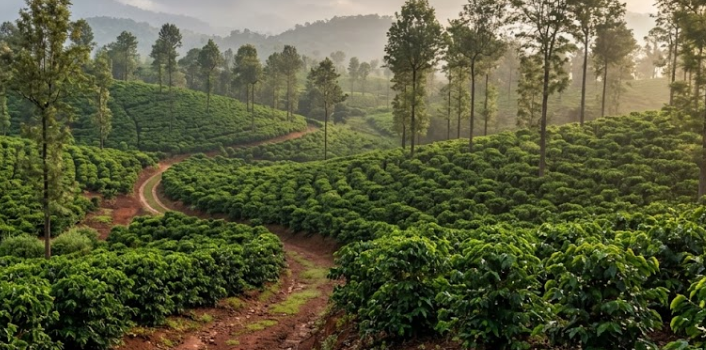
In an era where agriculture faces the dual pressure of feeding a growing population and mitigating climate change, a “new” old way of farming is gaining global traction: Agroforestry. By intentionally integrating trees and shrubs into crop and livestock systems, farmers are creating productive, sustainable landscapes that mimic the complexity of nature rather than the simplicity of a monoculture.
What is Agroforestry?
At its core, agroforestry is the practice of mixing trees with agriculture. Unlike traditional forestry (which focuses on timber) or conventional farming (which focuses on a single crop), agroforestry seeks to maximize the biological interactions between different species.
It is built on the principle that the whole can be greater than the sum of its parts. When trees and crops share the same land, they compete for resources like light and water, but they also provide mutual benefits that improve the health of the entire ecosystem.
The Five Main Pillars of Practice
Agroforestry isn’t a one-size-fits-all solution; it is adapted to the climate and needs of the local community. There are five primary recognized systems:
The Five Main Pillars of Practice
Agroforestry isn’t a one-size-fits-all solution; it is adapted to the climate and needs of the local community. There are five primary recognized systems:
- Alley Cropping: Planting rows of trees at wide spacings while a companion crop is grown in the “alleys” between the rows. This provides annual income from the crops while the trees mature.
- Silvopasture: The deliberate integration of trees and grazing livestock on the same land. The trees provide shade and shelter for animals, which can improve their health and productivity.
- Riparian Forest Buffers: Strips of trees, shrubs, or grasses planted along streams or rivers. These act as a biological “filter,” catching runoff from farms before it reaches the water.
- Windbreaks (Shelterbelts): Rows of trees planted to reduce wind speed. This protects sensitive crops, prevents soil erosion, and can even reduce heating costs for nearby farm buildings.
- Forest Farming: Cultivating high-value “specialty” crops under the protection of a managed forest canopy—such as ginseng, shiitake mushrooms, or decorative ferns.
Why It Matters: Benefits Beyond the Harvest
The shift toward agroforestry is driven by its remarkable ability to solve multiple environmental and economic problems at once:
- Climate Change Mitigation: Trees are carbon sinks. Agroforestry systems sequester significantly more carbon in the soil and biomass than conventional farming systems.
- Soil Health and Fertility: Deep-rooted trees bring nutrients from deep in the earth up to the surface. When their leaves fall and decompose, they act as a natural fertilizer for the surrounding crops.
- Biodiversity: By creating a multi-layered habitat, agroforestry supports a wider variety of birds, insects, and pollinators, which can lead to natural pest control.
- Economic Diversification: Instead of relying on a single harvest, farmers have multiple “streams” of income, such as timber, fruit, nuts, and grain, making them more resilient to market fluctuations.
The Path Forward
While agroforestry offers a blueprint for a more sustainable future, it requires a shift in mindset. It demands more complex management than a standard wheat field and often requires several years before the trees yield a profit.
However, as we look for ways to restore degraded lands and protect our water sources, the “emerald canopy” of agroforestry stands out as a vital tool. It proves that we don’t have to choose between a healthy forest and a productive farm—we can have both on the same acre.