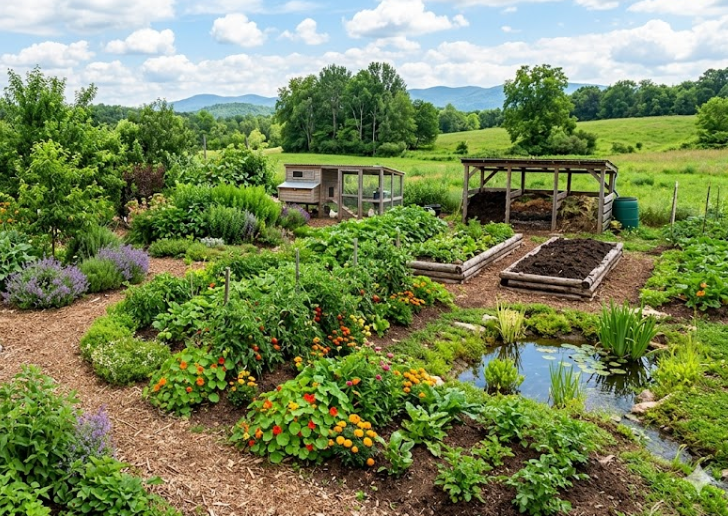
In a world increasingly affected by climate change, soil degradation, and resource scarcity, permaculture offers a powerful and hopeful solution. More than just a gardening method, permaculture is a design philosophy that works with nature rather than against it—creating systems that are sustainable, regenerative, and deeply connected to the environment.
What is Permaculture?
Permaculture is a combination of the words “permanent” and “agriculture,” but its scope extends far beyond farming. Developed in the 1970s by Bill Mollison and David Holmgren, it focuses on designing ecosystems that mimic natural patterns and relationships.
At its core, permaculture is about observing how nature works—how forests grow, how water flows, how ecosystems sustain themselves—and applying those principles to human environments like farms, homes, and communities.
The Ethics of Permaculture
Permaculture is guided by three simple yet powerful ethics:
1. Earth Care
Protect and nurture the natural environment—soil, water, forests, and wildlife.
2. People Care
Support human well-being by ensuring access to food, shelter, and community.
3. Fair Share
Redistribute surplus resources and limit consumption to create balance.
These principles encourage mindful living while reducing waste and environmental impact.
Key Principles of Permaculture
Permaculture design is built on practical principles that help create efficient, low-maintenance systems:
- Observe and Interact: Understand your environment before making changes.
- Catch and Store Energy: Harvest rainwater, sunlight, and wind.
- Produce No Waste: Recycle, compost, and reuse everything possible.
- Integrate Rather Than Segregate: Let elements work together (like plants supporting each other).
- Use Renewable Resources: Depend on sustainable inputs instead of finite ones.
These principles can be applied anywhere—from a small balcony garden to a large farm.
Benefits of Permaculture
🌱 Environmental Sustainability
Permaculture improves soil health, conserves water, and increases biodiversity.
🌿 Self-Sufficiency
Grow your own food and reduce dependence on external resources.
💧 Water Conservation
Techniques like rainwater harvesting and swales help retain water naturally.
🌍 Climate Resilience
Permaculture systems are designed to withstand extreme weather conditions.
🤝 Community Building
Encourages shared resources, local food systems, and stronger communities
Permaculture in Everyday Life
You don’t need a large piece of land to practice permaculture. Here are simple ways to start:
- Create a small kitchen garden with herbs and vegetables
- Compost your food waste at home
- Use natural fertilizers instead of chemicals
- Collect and reuse rainwater
- Grow plants that support each other (companion planting)
Even small changes can have a big impact over time.
Why Permaculture Matters Today
As urbanization grows and natural resources decline, the need for sustainable living has never been more urgent. Permaculture offers a practical roadmap to restore balance—helping individuals and communities live in harmony with nature.
It’s not just about growing food; it’s about redesigning how we live, consume, and connect with the planet.
Final Thoughts
Permaculture is a journey, not a destination. It encourages continuous learning, observation, and adaptation. By embracing its principles, we can create systems that are not only productive but also regenerative—giving back more to the Earth than we take.
Whether you’re a gardener, a homeowner, or someone simply looking to live more sustainably, permaculture opens the door to a greener, more balanced future.